
Every website owner wants their site to grow and rank higher in Google’s search results. A good WordPress SEO plugin makes that job much easier. With the right plugin, tasks like improving your site speed or cleaning up your on-page SEO go from confusing to straightforward.
Popular tools like Yoast SEO, All in One SEO, and Rank Math give you sitemaps, content checks, keyword guidance, and site audits, all from your WordPress dashboard. You don’t need to be an SEO expert to use them, and you don’t need to code.
Ready to find the right fit for your blog or business site? Below, we’ve rounded up 25 of the best SEO plugins for WordPress to help your content get noticed on Google.
- Does WordPress Need SEO Plugins?
- The Best SEO Plugins for WordPress
- Structured Content Plugins
- Anti-Spam WordPress Plugins
- Which Is the Best WordPress SEO Plugin for You?
- Making a Choice: Watch Out for Harmful Plugins
Does WordPress Need SEO Plugins?
WordPress is often called an SEO-friendly platform, and for good reason. Out of the box, it lets you add title metadata, headers, alt text, and custom URLs, all things that help your content perform well in search. Even so, a dedicated SEO plugin makes the process easier and faster.
You can follow SEO best practices manually and still get results. But a solid WordPress SEO plugin guides you through each page’s content and searchability step by step, so you’re less likely to miss something important.
SEO plugins give website owners several ways to customize their pages, and each plugin brings its own set of tools to the table. One of the most useful is built-in SEO analysis, a feature WordPress doesn’t offer on its own.

The Best SEO Plugins for WordPress
If you want to follow current SEO best practices and improve your results, installing the right plugin is the fastest way to get there. Here’s our list of the best SEO plugins for WordPress:
- Yoast SEO
- The SEO Framework
- SEOPress
- W3 Total Cache
- WordLift
- RelNoFollow Checkbox
- All in One SEO Pack
- Broken Link Checker
- SEOquake
- Rank Math
- CrawlWP
- WP Meta SEO
- Rankie
- Squirrly SEO
- Republish Old Posts
- Auto Image Attributes
- Assets Manager, Dequeue Scripts, Dequeue Styles for WordPress
- Semrush SEO Writing Assistant
- All In One Schema Rich Snippets
- Analytify – Google Analytics Dashboard For WordPress
- Really Simple SSL
- Akismet
- Titan Anti-Spam & Security
- Quick Page/Post Redirect
- ShortPixel
If you’re wondering how these plugins work, check them out below.
1. Yoast SEO
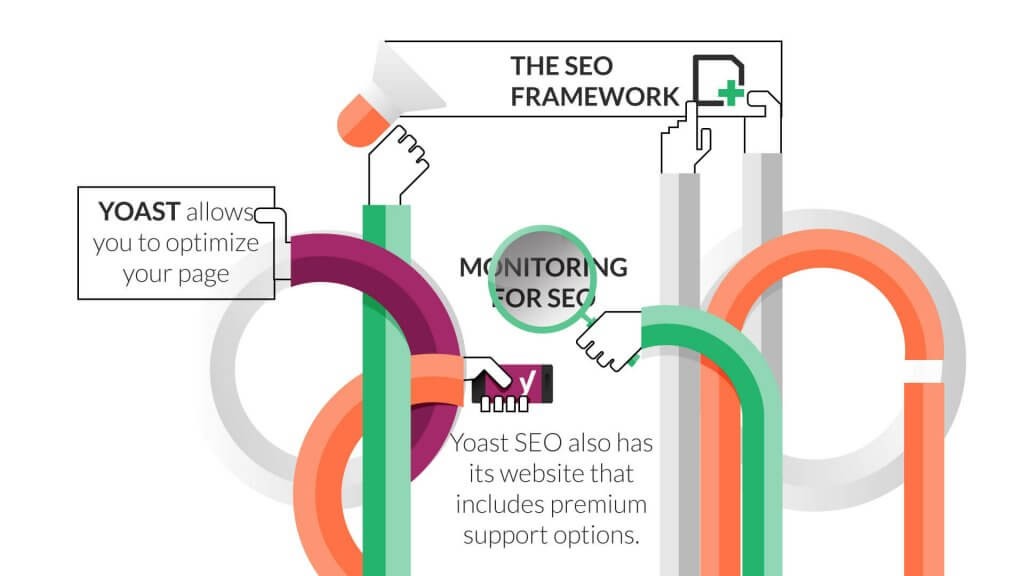
Yoast is one of the most popular SEO plugins for WordPress, and it earns that reputation. It’s beginner-friendly right out of the box, but experienced users can dig into its advanced settings too. It starts working the moment you install it, and its features give you plenty of room to customize your setup.
Yoast helps you optimize each page. Its interface lets you write a unique, optimized title for every page, add a distinct meta description, and build an SEO-friendly URL. It then scores your content for SEO and readability and gives you a report card for each post or page. You can also control how search engines index a page by enabling or disabling robot tags, and you can edit SEO titles, descriptions, and canonical URLs directly from the plugin.
Yoast SEO also provides various seo settings, allowing users to change SEO titles, descriptions, and canonical URLs to optimize posts and pages effectively.
It allows you to verify your website in Google Search Console.
Google’s free Search Console gives you tools for monitoring how your site performs, both technically and in the eyes of searchers. You can see which keywords drive traffic, how your content performs, and whether Google can properly read your pages. Yoast lets you connect Search Console by pasting a snippet of HTML code into its interface, and that connection stays secure even after theme or WordPress updates that might otherwise wipe it out.
Google Search Console is a must-have, and by simply copying and pasting some HTML code into the Yoast user interface, you can authenticate your website with Google Search Console and make use of its valuable SEO statistics. When you add your code via the plugin, it will be secure from accidental overwrites. That prevents you from having to re-add the code after changes to your site’s code, such as theme and WordPress upgrades that aren’t handled correctly by web developers and SEO professionals.
You can edit your robots.txt file directly. Robots.txt tells search engines which pages they can and can’t crawl. Instead of downloading, editing, and re-uploading the file every time you make a change, Yoast lets you manage it right from the plugin’s interface, protecting it from being overwritten by theme or plugin changes.
It generates an XML sitemap automatically. Sitemaps give search engines a clear list of pages to crawl, and Yoast builds one automatically every time you publish new content. You can also enter target keywords and check how well you’ve optimized them, preview how your page will look in Google’s search results, and run a readability check that flags long paragraphs or missing headings.
Yoast’s developers update the plugin every two weeks to keep pace with SEO changes. The premium version adds a redirect manager, content insights, support for up to five focus keywords per page, and social media previews for Facebook and X. Yoast Premium currently runs about $118.80 USD a year depending on the package, though the free version already covers most of what a small site needs.
The world of SEO is ever-changing, which is why Yoast developers update their plugins very frequently to add new features. Yoast’s website includes premium support options, a bustling community in the forum section, a blog for learning more about SEO, and SEO courses for beginners, intermediates, and experienced users.
2. The SEO Framework
The SEO Framework is a fast, minimalist SEO plugin with no ads or upsells built into the interface. It skips extras you probably don’t need and focuses on helping you keep your site fast without wading through long, technical SEO guides. It pulls the beginning of a post or page, strips out unnecessary formatting, and trims it to the correct length for search results.
A colour-coded scale in the settings shows how close each post is to being search-ready, so you can spot exactly where to focus your effort. The plugin started inside the WPMU DEV community before becoming available to everyone for free.
The interface suits beginners well. There’s no setup wizard, but a five-minute setup guide walks you through the basics, and helpful tooltips explain each setting along the way. Experienced users can tap into the plugin’s API for more control. A few optional extensions round out the feature set:
- Local SEO: helps you optimize for local search by targeting local keywords, improving your Google Business Profile, and building consistent name, address, and phone (NAP) citations. Learn more in our guide to local SEO.
- Article enhancement: automatically adds structured data to your published posts, useful for bloggers and news publishers, plus a Google News sitemap.
- AMP integration: connects The SEO Framework to your AMP plugin for AMP-supported pages.
- SEO monitoring: tracks your optimization progress and statistics over time.
- Incognito mode: hides all development comments from The SEO Framework.
- Redirects: hides development comments from the plugin’s output.
Most of these extensions are free, and you won’t need to pay for premium features to use them. The SEO Framework also blocks search engines from indexing low-quality pages, like 404s, feeds, and empty categories, and steers crawlers toward posts with active comments instead of comment archive pages.
You’ll get colour-coded indicators that flag which pages need attention first, and you can configure your homepage’s title, meta description, tagline, and social image directly from the plugin. Once you turn it on, The SEO Framework also builds an automatic sitemap covering your entire site.
Accessibility got real attention here too. The colour scheme works for users with colour vision differences, and the interface supports keyboard navigation and screen readers. The plugin doesn’t collect data or set cookies, and its interface stays free of branding and ads.
3. SEOPress
SEOPress is a strong, ad-free option among WordPress SEO plugins. It’s precise and fast, and you can import settings from other tools if you’re switching over.
You can set your own meta titles and descriptions for every post, page, or your entire site, giving you full control over how search engines describe your pages.
SEOPress can also help populate your Google Knowledge Panel, the info box that appears alongside certain search results with a short profile, links, and social profiles. A strong knowledge panel gives searchers an instant sense of what they’re looking at.
Content analysis is another strength. SEOPress reviews your structure, headlines, titles, and images, then helps you organize everything to improve your on-page SEO and your ranking chances.
Both XML and HTML sitemaps are built in. XML sitemaps help search engines crawl your site, while HTML sitemaps help visitors find their way around. Some competitors, including Yoast, don’t generate HTML sitemaps without a separate plugin.
Broken links hurt both your SEO and your visitors’ experience. SEOPress Pro includes 404 monitoring to scan your site for broken links, working alongside its built-in broken link checker, which lists every broken link it finds so you can update or remove them.
You can connect Google Analytics right from your dashboard by entering your login details, so you don’t need to leave WordPress to check your numbers. SEOPress also gives you control over your Google Maps listing, letting you set your business name, address, coordinates, URL, and phone number for local search.
SEOPress Pro now costs $49 a year for one site, $59 a year for up to five sites, or $149 a year for unlimited sites, a genuinely competitive rate for agencies managing several client sites. The free version already covers unlimited keyword analysis, XML sitemaps, and basic redirects.
4. W3 Total Cache
Page speed is a real ranking factor, and W3 Total Cache is built to improve it. It shortens your site’s download time so visitors get a smoother experience and search engines see a faster page. Install it, turn on its caching features, and you’re set.
Once it’s running, use Google PageSpeed Insights to compare your site against competitors and track your improvement over time. Many sites see load times improve several times over after proper configuration.
Setup is straightforward, and there’s plenty of documentation online if you get stuck. W3 Total Cache improves performance across devices, so visitors on mobile get the same fast experience as those on desktop.
Features:
- The Speed Coach feature gives you step-by-step guidance for making your site faster.
- The BoldGrid Easy SEO option reviews your content and suggests improvements.
- The Total Cache feature speeds up page loading, which supports better search rankings.
- It supports shared hosting, VPS, and dedicated servers, SSL, and Accelerated Mobile Pages.
- You can manage your CDN settings across your media library, theme files, and WordPress itself from one place.
- You can cache pages, posts, CSS, JavaScript, feeds, search results, and databases in memory, on disk, or through a CDN, and even set caching rules by referrer or user agent group.
W3 Total Cache Pro adds performance diagnostics for your server, database, and site as a whole, plus cache controls for comments and eCommerce features so speed stays consistent without serving outdated content. Paired with a CDN, the plugin helps visitors anywhere in the world load your site quickly, and it supports extensions like the Genesis Framework and WPML.

5. WordLift
WordLift puts AI to work for publishers, content editors, and SEO specialists who want more organic traffic. This AI-powered tool converts your pages into machine-readable content by adding schema.org markup, which helps organize your content and automates structured data.
WordLift also improves content discoverability through internal links, suggestion widgets, and semantically rich metadata. It converts your articles into content that search crawlers, chatbots, and voice assistants like Google Assistant, Siri, and Alexa can understand, which helps boost your organic traffic over time.
Adding this metadata layer brings a few clear SEO benefits:
- Schema.org markup can meaningfully boost your visibility in Google’s search results.
- Contextual, semantically-based internal linking improves how usable your site feels to visitors.
- Semantic interlinking and content suggestions improve engagement, something Google’s algorithms pay close attention to.
WordLift also uses WooRank’s technology to track your content’s performance and suggest improvements. WooRank runs an audit of your technical, on-page, and off-page SEO, giving you clear, actionable insights to improve rankings, traffic, and conversions. It also integrates with Google Analytics.
WordLift is a premium tool, with plans starting around $799 USD a month (billed yearly), plus a discount for annual billing. A 14-day free trial lets you test it before committing.
6. RelNoFollow Checkbox
Google pays close attention to the links on your pages, and low-quality links can hurt your rankings. Adding a “nofollow” attribute to external links tells Google not to pass ranking value to that link, which is especially useful for sponsored or untrusted links. Doing this manually for every link gets tedious fast.
The Rel Nofollow Checkbox plugin adds a simple checkbox to WordPress’s link editor, so you can mark a link as nofollow without touching any code.
Features:
- Installation takes just a minute or two.
- It removes the need to dig through HTML to add nofollow tags manually.
- It works well for affiliate marketers managing lots of outbound links.
- It’s lightweight and won’t slow down your site.
- You can review guest posts or contributor articles to catch unapproved promotional links before they go live.
Keep in mind that this plugin is fairly basic and hasn’t seen frequent updates, so it’s worth confirming compatibility with your current WordPress version before relying on it for a busy site.
7. All in One SEO Pack
All in One SEO, often shortened to AIOSEO, is used on more than two million websites. It can improve your site’s SEO within minutes and doesn’t require any coding knowledge or SEO expertise to get started.
Features:
- A quick launch wizard gets you set up in about 10 minutes. Install the plugin, choose the SEO features you want, and turn on analytics and recommendations if you’d like more guidance.
- You can manage your entire SEO setup from the WordPress dashboard.
- It tracks your site score and flags urgent issues so you can fix them quickly.
- Advanced tools include sitemaps, an SEO search dashboard, local SEO, schema markup, and social media integration.
- You can optimize every post and page before publishing, including your title, meta description, and target keywords, while checking that your content stays readable.
- Documentation is thorough, and you can reach support through a ticket system if you get stuck.
AIOSEO offers a free Lite version, along with paid tiers: Basic at $49.50 a year for one site, Plus at $99.50 for three sites, Pro at $199.50 for 10 sites, and Elite at $299.50 for 100 sites. If you’re switching from Yoast, AIOSEO includes an import tool that carries your existing data over.
8. Broken Link Checker
Broken links (links pointing to a 404 page) confuse search engines and make your content harder to crawl and rank. Avoiding broken links matters for your visitors’ experience as much as your SEO.
Checking every link manually would take days. Broken Link Checker scans your posts and pages for you and gives you a list of broken links to fix, edit, or remove. Leave it active, and it will notify you whenever a link breaks.
Features:
- You manage every link change from the plugin’s main page, without opening each post individually.
- You can search and filter your links.
- It tracks comments, custom fields, and more.
- It flags anything that could confuse readers, including missing images and broken redirects.
- You can stop search engines from following broken links on your site.
9. SEOquake
SEOquake takes a different approach from most plugins on this list. It runs as a Google Chrome extension, so you can analyze a page’s SEO without installing anything on WordPress or logging into a dashboard.
Billed as a full SEO toolbox for your browser, SEOquake works across Chrome, Firefox, Opera, and Microsoft Edge.
Features:
- You can run a complete SEO analysis of any page directly from your browser, with no complicated interface to learn. Turn on the features you need in the SEO bar, and you’re ready to go.
- A real-time diagnosis feature flags optimization issues that search engines are likely to notice.
- You can pull details on any page’s internal and external links, including URLs and anchor text.
- You can compare domains and URLs across SEO metrics and build a custom report from your findings.
- You can generate a detailed keyword report and filter it to focus on what matters most.
You can export SEOquake’s data as a CSV file or print it directly.
10. Rank Math
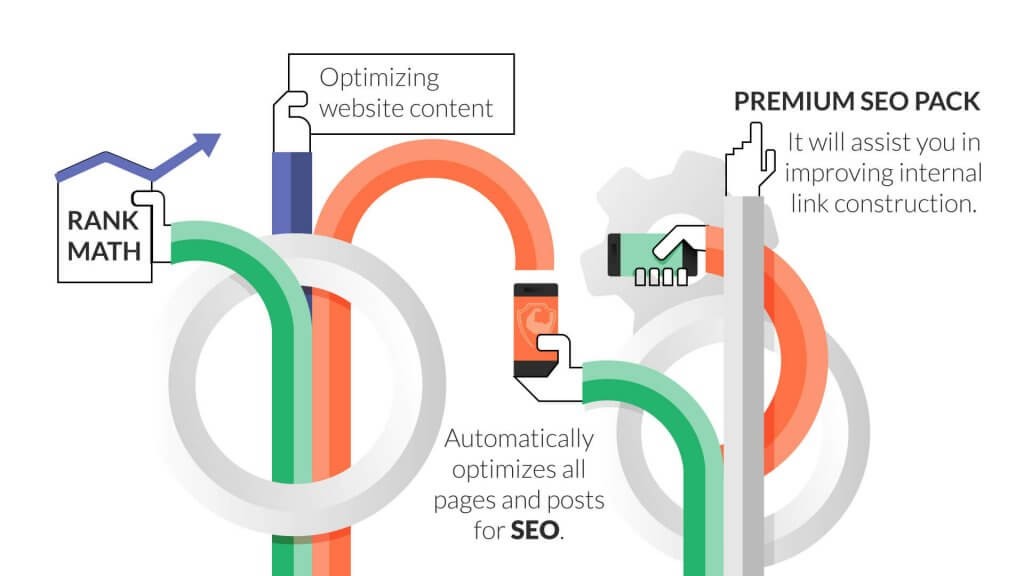
Rank Math is a genuinely strong WordPress SEO plugin that helps you optimize your website content with real-time analysis, all without leaving your WordPress dashboard. It combines the core features of several other SEO plugins into one lightweight, easy-to-manage tool.
Features:
- You can refine meta titles and descriptions to reduce the risk of display errors on Google, and set noindex, nofollow, or noarchive tags across pages and taxonomies.
- It’s a genuine one-stop shop for on-page SEO.
- The plugin is built for speed and won’t drag down your site’s load times.
- Every post and page gets checked against a 40-point SEO analysis.
- The interface is simple and easy to understand, even for beginners.
- It can automatically add alt and title tags to images that are missing them.
- A 404 monitor flags pages your visitors are hitting that no longer exist, and a redirection module sends them somewhere useful.
- Built-in XML sitemaps ping search engines automatically whenever you publish or update content.
- Rank Math supports breadcrumbs and rich snippets, including articles, products, recipes, videos, local businesses, and events, without needing extra plugins.
- It connects directly to Google Search Console, showing your rankings, impressions, and site issues right in your WordPress dashboard.
Rank Math offers a capable free version, with paid plans starting around $7.99 a month (billed annually) for the Pro tier, scaling up to Business and Agency plans for larger teams managing more client sites and keywords.
11. CrawlWP
Every other plugin on this list helps you optimize a page. CrawlWP helps you get it indexed. Heads up: this post contains affiliate links. If you click through and buy a plugin, we may earn a small commission at no extra cost to you.
Publishing a page doesn’t put it in Google’s index right away. It puts the page in a queue that can take days or weeks to clear. CrawlWP shortens that wait by notifying Google, Bing, Yandex, and others the moment you publish or update content, using the Google Indexing API and the IndexNow protocol.
Features:
- Automatic submission to six search engines on publish, update, or delete, plus bulk submission for migrations and content refreshes
- Auto-indexing that finds pages that should be indexed but aren’t, and resubmits them without you having to catch the gap yourself
- An index status checker that shows whether any URL sits in Google’s or Bing’s index, along with full submission history
- Google Search Console, Bing, and Yandex performance data (clicks, impressions, position, and CTR) surfaced right inside your WordPress dashboard
- Scheduled daily, weekly, or monthly email reports
- One-click verification for Google Search Console, Bing Webmaster Tools, and Yandex Webmaster
- All data stored on your own server instead of routed through a third party
CrawlWP runs alongside your main SEO plugin instead of replacing it, so it won’t conflict with Yoast, Rank Math, or SEOPress.
The free version covers instant indexing across all six search engines. Paid plans add auto-indexing, the index status checker, the insights dashboard, and email reports, starting at $59 a year for one site, with five-site and unlimited-site tiers available and a 14-day money-back guarantee
12. WP Meta SEO
WP Meta SEO is a free plugin available from your WordPress dashboard or the WordPress plugin directory. It tracks your site’s SEO progress through a dedicated dashboard and speeds up content optimization by letting you edit multiple pages at once, including a genuinely useful bulk processing feature.
Features:
- A clean dashboard shows and analyzes your permalink structure, meta titles and descriptions, image sizes, alt text, new or updated content, link attributes, and 404 errors.
- It generates XML and HTML sitemaps for your site.
- Built-in image resizing and optimization tools help with page speed.
- It integrates with Google Analytics.
- It flags SEO issues so you can fix them quickly.
- Bulk editing saves real time on larger sites.
- It logs every 404 error, including the URL, hit count, link text, and source.
- A Pro version adds further features.
13. Rankie
Rankie is a keyword-tracking plugin built to strengthen your keyword strategy through tracking, reporting, and research tools.
Features:
- Rank tracking: See your Google rankings for target keywords in one place, right from your WordPress dashboard. Rankings update daily, and you can check a keyword’s ranking instantly using the “up to date” column. Click into any keyword to see its full ranking history over time.
- Ranking reports: Rankie generates PDF reports on your current rankings and trends, which you can share with teammates who don’t have dashboard access. Filter reports by month, year, or your full tracking history, and set up daily email alerts if you want more frequent updates.
- Keyword research: Rankie’s built-in tool generates long-tail keyword suggestions for each search query, helping you expand your target list and keep a steady stream of content ideas.
14. Squirrly SEO by AISQ
Squirrly SEO offers a free, comprehensive SEO suite built for people who find SEO overwhelming. It helps you create content that works for both readers and search engines, aiming to improve both your rankings and your engagement.
With Squirrly, you get SEO stats, weekly audits, and keyword suggestions to help bring in more traffic.
Features:
- Squirrly gives feedback as you write. Enter your article title and target keyword, and a series of indicators light up as you compose your content, similar to having an SEO expert looking over your shoulder. Unlike Yoast, which requires saving your content to see suggestions, Squirrly updates in real time.
- It analyzes your competitors and suggests ways to outperform them.
- It generates shareable content reports for your team, useful if a writer needs a quick refresher on SEO basics.
- Weekly progress reports help you track improvements over time.
A security note: Squirrly SEO had a disclosed vulnerability in 2026 (CVE-2026-7624) affecting versions up to 12.4.16, which allowed lower-permission users to trigger admin-level actions[web:24]. Update to the latest version immediately if you’re running this plugin, and check for security patches regularly.
Structured Content Plugins
Google increasingly shows FAQs directly in search results, and structured content (schema) plugins make it simple to add FAQs and other rich content types to your site. Two of the most popular options are:
Schema Pro is an all-in-one WordPress schema plugin that goes beyond the basics.
- It supports 13 different schema markup types.
- No coding is required.
- It works with all post types and custom fields.
- It includes filters for additional fields.
- Its code is clean and follows Google’s structured data standards.
Schema App Structured Data is a compatible alternative with its own premium version.
- It automatically generates schema markup for basic data.
- It helps Google build a clearer site structure in search results.
- Advanced users can customize the markup directly.
- It supports more complex schema types.
- Custom post and field mapping tools let you review your setup, alongside YouTube video snippet support for WooCommerce and Wikidata integration.
15. Republish Old Posts
Republish Old Posts plugin refreshes older content by updating its publication date, and it automatically shares the updated post to your social media accounts.
Features:
- It auto-publishes updates to social media, saving you from manually resharing older posts. Install it, set your parameters, and every new or refreshed post gets shared to your connected accounts automatically.
- The free version connects to Facebook and X, and the Premium version adds support for additional platforms.
- You can customize your posting feed instead of sticking to one fixed template or schedule.
- You can choose which hashtags to include or exclude from each post.
16. Auto Image Attributes From Filename With Bulk Updater
This long-named plugin automatically adds alt text to your images, saving you from writing it manually for every upload. Alt text is the description attached to an image’s HTML tag. It displays when an image fails to load, and it helps visitors who use screen readers, even though many site owners overlook it entirely.
Bialty is a good example of this type of plugin. It generates alt text based on your page, article, or product titles (including WooCommerce products), and you can still customize individual images through a post meta box if needed. Once set up, it works automatically across your entire site, both for existing content and anything you publish going forward.
17. Assets Manager, Dequeue Scripts, Dequeue Styles for WordPress
Many plugins load their own scripts and styles on every page of your site, whether they’re needed there or not, and that slows things down. Assets Manager fixes this by letting you choose exactly which scripts and styles load on which pages, cutting unnecessary requests for a faster site.
Features:
- It reduces the number of HTTP requests and trims the actual HTML on each page.
- It makes scanning your source code easier if you’re a developer troubleshooting an issue.
- It resolves conflicts between plugins and themes, such as two JavaScript files interfering with each other.
- You’ll see the improvement directly in tools like GTmetrix, PageSpeed Insights, and Pingdom.
- Faster load times tend to help your search rankings too, since Google factors page speed into its algorithm.
Your server log files will also be smaller and easier to scan once unnecessary requests are gone.
18. Semrush SEO Writing Assistant
The Semrush SEO Writing Assistant works alongside Semrush’s Keyword Research, Competitor Research, and plagiarism-checking tools to give you a complete content workflow. It offers SEO suggestions based on top-performing content in Google’s results and helps guide you toward stronger, more targeted copy.
Features:
- It builds SEO-friendly content by suggesting keywords based on competitor pages, and an SEO Content Template gives you even more direction.
- It works inside WordPress and Google Docs, so you can improve content right where you write it.
- It scores your content against a set of criteria, offers text suggestions, and recommends related keywords based on what you’ve already added.
19. All In One Schema Rich Snippets
Rich snippets are the visual extras you see in search results, like star ratings and product photos, that help a listing stand out. They’re common on eCommerce product pages and blog reviews, and Google favours them because they add useful detail without cluttering the results page.
WordPress doesn’t generate rich snippets on its own, but the All in One Schema Rich Snippets plugin handles it for you.
Features:
- It narrows your search listing down to the details that matter most, from photos to author avatars to star ratings.
- It gives your listings a more visual presence in Google’s results, which benefits both your site and the people searching.
- It supports events, reviews, people, products, recipes, and videos. A recipe listing, for example, can show a star rating, review count, and a photo of the finished dish.
- It compiles the details needed to share your results cleanly on Facebook.
20. Analytify – Google Analytics Dashboard For WordPress
Google Analytics is essential for understanding your visitors, what they’re looking for, and whether your content meets that need. Analytify is one of the most complete Google Analytics plugins available for WordPress.
It lets you install your Google Analytics tracking code on your site and review metrics for individual pages directly from your dashboard. The Pro version adds support for WooCommerce and Easy Digital Downloads, along with real-time analytics.
Features:
- It pulls relevant data straight from Google Analytics.
- It tracks traffic statistics for each page.
- It tracks social media statistics too.
- It gives you a real-time stats dashboard.
21. Really Simple Security (Formerly Really Simple SSL)
Google has made HTTPS a real ranking factor, and sites without a secure connection (SSL certificate) get flagged and pushed down in results. An SSL certificate protects the data moving between your site and your visitors, so skipping it puts sensitive information at risk. You can get an SSL certificate through your hosting provider, but configuring the domain-wide HTTPS setup in WordPress isn’t always simple.
Really Simple Security handles that setup for you directly in the WordPress interface, so you don’t need to touch your .htaccess file. Install the plugin, set your HTTPS URL as the default, and it takes care of the rest.
Features:
- It keeps your SSL encryption protocols current to help protect against attacks.
- It automatically fixes common WordPress SSL configuration issues.
- It redirects all HTTP traffic to HTTPS.
- It scans for mixed content (a mix of secure and insecure elements) and updates HTTP links to HTTPS, except for links pointing to other domains.
- It updates your site and home URLs to HTTPS and adjusts your wp-config.php file as needed.
Anti-Spam WordPress Plugins
People often try to promote their own sites in your comment section using spammy links or keywords. Anti-spam plugins filter these out, keeping only genuine comments visible. Two solid options are:
Some of the best anti-spam plugins for WordPress include:
22. Akismet
Every WordPress site comes with Akismet pre-installed. Connect it to an Akismet account using an API key, and it gets to work right away, running incoming comments through its filtering algorithms. Legitimate comments get published, and the rest go to your spam folder, where you can still review each comment’s status.
23. Titan Anti-Spam & Security
Titan Anti-spam & Security offers a broader set of security tools alongside spam filtering, including a security scanner, firewalls, security audits, real-time IP blocking, malware scanning, and file restoration. It started as a simple spam filter and has grown into a more complete WordPress security tool, with an interface that keeps spam filtering simple and free of CAPTCHAs.
24. Quick Page/Post Redirect
Quick Page/Post Redirect gives you two ways to set up redirects on your WordPress site:
- Quick Redirect (301 redirects): Enter a request URL and a destination URL, and the plugin handles the redirect. This is useful for fixing typos in page URLs, sending old URLs to new ones, or redirecting links from a previous site you’ve since moved to WordPress.
- Individual Redirects: For existing posts and pages, the plugin adds a meta box to the edit screen where you can set a redirect destination and type (301, 302, or meta). Use this for redirecting duplicate content, retired menu items, or pages that have moved elsewhere on your site.
Once installed, go to the page you want to redirect and set it up from there. Check out our guide to 301 redirects for more detail.
25. ShortPixel
ShortPixel is one of the best WordPress plugins for image optimization. It’s lightweight, reads EXIF data, and compresses images without noticeably affecting quality. Install it, test it on a few images to confirm the quality holds up, then optimize your entire image library. You can also apply it retroactively to images you’ve already uploaded.
ShortPixel supports JPGs, PNGs, GIFs, WebPs, and PDFs, with Lossy, Glossy, and Lossless compression modes, and it keeps a backup of your original files.
The free plan includes 100 credits a month, with paid options available for larger image libraries. ShortPixel also works smoothly with WPML-powered multilingual sites, without any special configuration needed.
Which Is the Best WordPress SEO Plugin for You?
- Yoast SEO: best for optimizing individual posts and pages.
- SEOPress: best white-labelled plugin with no ads.
- The SEO Framework: best lightweight SEO plugin.
- Rank Math: best all-in-one SEO plugin.
- CrawlWP: best for fast search engine indexing and in-dashboard performance tracking.
Making a Choice: Watch Out for Harmful Plugins
You’ll have plenty of SEO plugins to choose from, but not all of them are safe. Some plugins are outdated, untested for vulnerabilities, incompatible with your existing setup, or, in rare cases, built to gain unauthorized access to your site. If you’re not sure, have a developer review a plugin before you install it to help protect your site.
Once you’ve picked your SEO plugin, it’s worth checking out our trustworthy security plugins for WordPress to keep the rest of your site protected. Now that you know your options, which SEO plugin will you install first?

Your WordPress site deserves better than generic hosting.
NVMe servers tuned for WordPress, staging, automatic updates, and 24/7 human support from as low as $2.95 per month with 99.9% uptime and a 30-day money-back guarantee.