Domain privacy keeps your personal details private. It hides your name, address, and phone numbers in public domain records. For example, a proxy contact steps in to replace your real name, email, and other personal information. This safeguard limits the damage to you and your business by helping to prevent:
- Harassment.
- Scams.
- Spam.
But… do you really need domain privacy?
Well, here’s a fact to think over:
In the past five years, cyberattacks have cost businesses in the United Kingdom nearly $60 Billion USD.
Now, please consider how much money online security breaches are costing all over the globe. Given such a threat, it’s imperative that you at least consider domain privacy.
Here are three items linked with domain privacy that need to be understood:
- WHOIS.
- Proxy masking.
- GDPR.
In simple, plain English, we are going to give you a solid understanding of the above three topics. To get started, please keep reading.
CONTENTS TABLE
- Domain Privacy: A Little More Detail
- Understanding WHOIS: Why Your Data Matters
- The 5 Critical Risks of NOT Using Domain Privacy
- Is Domain Privacy Actually Worth It? (Myth‑Busting)
- How to Enable Domain Privacy With HostPapa
- Domain Privacy & HostPapa’s Integrated Security Stack
- GDPR Domains vs. Domain Privacy: Do You Need Both?
- Who Needs Domain Privacy Most? (Personas)
Blog highlights
- Domain privacy deconstructed: Big words such as WHOIS and proxy are set out in easy-to-understand terms. A simple explanation is provided for how scammers and spammers get your details.
- WHOIS explained: Want to know why WHOIS exists and who is behind it? Full details given.
- Enabling domain privacy: Step-by-step instructions to show that protecting your personal details can be easy. Stop information bandits from following your breadcrumbs today.
“We’re an information economy. They teach you that in school. What they don’t tell you is that it’s impossible to move, to live, to operate at any level without leaving traces, bits, seemingly meaningless fragments of personal information.” [1]
William Gibson, Johnny Mnemonic, 1981.
Domain Privacy: A Little More Detail
Domain privacy sounds technical, but it’s simply about keeping your personal details off public lists. You can do this while still keeping full control of your domain. When you register a domain, your name, address, email address, and phone number are entered into the global WHOIS database.
WHOIS is a searchable database of registered domains. If you want to prevent your details from being found, you can add domain privacy protection. This process involves a privacy or proxy service that will show its contact details instead of yours. The behind-the-scenes records will still list you as the legal owner. This action is known as proxy masking. It’s designed to hide your true IP or data by routing traffic through intermediaries.
That’s the principal part of the domain privacy definition. It masks your public WHOIS record without transferring ownership or control. Think of it like using a registered office address instead of your apartment when you run a company from home. You still get your mail, but strangers don’t get your address.
It’s important to distinguish this from domain security, which covers things like:
- DNS protection.
- SSL certificates.
- Account hardening.
Most registrars, including providers like HostPapa, offer domain privacy as an add‑on service that can be enabled from your account dashboard.
To help set the stage for the rest of this guide, it would be helpful if you could make a quick distinction.
Whois Privacy Protection and Domain Security: A Comparison
WHOIS Privacy Protection
- What it protects: Contact details in the WHOIS record (name, address, email, phone).
- How it works: Replaces your details with proxy or registrar information in public WHOIS.
- Ownership impact: You remain the legal registrant. The proxy appears only in public view.
- Main benefits: Reduced spam, fewer cold calls, more privacy, and safety for small teams.
Domain Security
- What it protects: The domain itself and associated services (DNS, website, email).
- How it works: Uses tools like SSL certificates, firewalls, DNS security, and account safeguards.
- Ownership impact: You remain the owner. Security features simply protect access and traffic.
- Main benefits: Reduced hacking risk, safer transactions, better visitor trust.
Both matter for anyone launching a serious online presence. They also solve different problems, and mixing them up is where many new founders start to feel lost.
Understanding WHOIS: Why Your Data Matters
The WHOIS database is a global registration system governed by ICANN, the body that oversees domain names and internet stability. When you register a domain, ICANN rules require that valid contact information be collected and stored. This information includes your:
- Name.
- Address.
- Email.
- Phone number.
The information is requested to make sure there’s accountability if something goes wrong.
By default, that information flows into public WHOIS records that anyone can query for free with a basic WHOIS lookup tool. If you run a check on a domain like apple.com using a WHOIS lookup service, you’ll see proxy details instead of Tim Cook’s home address.
Big brands such as Apple take WHOIS privacy seriously. For small businesses, the same rules apply. Privacy needs to be enabled, otherwise registration information is visible to:
- Bad actors (malicious individuals).
- Data scrapers.
- Marketers.
“The past is relevant only as data.” [2]
Richard K. Morgan, Altered Carbon, 2003.
If you’re using a provider like HostPapa, WHOIS privacy is available as an included feature on some domain types or as a low‑cost add‑on within your dashboard. So, your registration information is replaced with the registrar’s contact details instead. To make the difference concrete, here’s how public versus protected WHOIS looks conceptually:
Public WHOIS
- Name shown: Your personal or company name.
- Email: Your real email, easy for bots to harvest.
- Physical address: Your home or office address.
- Phone number: Direct phone number, prone to cold calls.
- Exposure risk is high: Spam, scams, and unwanted contact.
Protected WHOIS
- Name shown: Privacy service or registrar name.
- Email: Proxy email that forwards legitimate messages.
- Physical address: Generic or service address from the privacy provider.
- Phone number: Service number or none displayed.
- Exposure risk is lower: Data shielded behind proxy.
“(…), at the most technical and tactical levels, cyberspace does have completely different dynamics from conflicts on the land, in the air, or on the sea.” [3]
Jason Healey, A Fierce Domain: Conflict in Cyberspace, 1986 to 2012, 2013.
The 5 Critical Risks of NOT Using Domain Privacy
If you’re weighing the risks of public domain information, it helps to break each risk into a clear scenario.
1. Instant Spam Flood
Leaving your WHOIS on public view invites automated bots to scrape your email and contact details as soon as the registration hits the system. Many owners see unsolicited offers within the first 24 hours. That might sound manageable. But, when you’re juggling:
- Invoicing.
- Support emails.
- Supplier messages.
A noisy inbox or even physical mail becomes a genuine tax on your productivity.
“I saw the best minds of my generation writing spam filters.” [4]
Neal Stephenson, 2012.
2. Domain Hijacking and Social Engineering
Public WHOIS data helps attackers impersonate you with your registrar or hosting provider. They can call support pretending to be the domain owner. They can provide your real name, address, and phone number.
Attackers can even attempt account access or transfer requests, known as domain hijacking. To ensure domain security, security professionals recommend reducing the exposure of sensitive details wherever possible.
3. Phishing and Spear‑Phishing Attacks
Scammers use your real contact information to craft targeted phishing campaigns that feel uncomfortably personal. It’s easy for an attacker to send believable messages to your staff or partners pretending to be you. They may ask for payments, credentials, or internal information.
These spear‑phishing attacks are far more powerful than generic spam because they lean on familiar names, domains, and timing.
4. Identity Theft and Data Aggregation
On its own, a WHOIS record may look harmless. However, when combined with leaked marketing lists and social media profiles, it becomes very dangerous. Your full name, physical address, phone number, and email are exactly the kind of starter kit details fraudsters use.
The starter kit details are perfect for fraudsters to be able to:
- Answer security questions.
- Guess your passwords.
- Open accounts using your name.
5. Competitive Snooping and Portfolio Exposure
Public WHOIS makes it easy for competitors to see which domains sit under your name or company. If you register future product names on hidden domains, a reverse WHOIS search can reveal the pattern and give rivals details about your plans. This action is more commonly known as competitive espionage. Domain privacy helps avoid broadcasting your entire portfolio to anyone devious enough to look.
Domain privacy won’t solve every security issue, but it lowers the attack surface that starts with a simple lookup form.
Is Domain Privacy Actually Worth It? (Myth‑Busting)
Questions about domain privacy worth it often sit behind familiar myths that circulate in founder groups and hosting forums. Let’s unpack those one by one, because a lot of hesitation stems from misunderstandings about how WHOIS privacy works in practice.
Myth 1: It’s Too Expensive
A common assumption is that WHOIS privacy protection is a premium upsell that only big brands bother with. In reality, many registrars now include basic WHOIS privacy by default on eligible domains. They may also charge a small annual fee, rather than hosting or marketing costs.
HostPapa, for example, offers domain privacy as a low‑cost add‑on through its dashboard. It often bundles security features competitively alongside hosting plans aimed at small businesses. For most founders, the cost is closer to a monthly coffee habit than a big infrastructure line item.
Myth 2: I Have Nothing to Hide
Privacy is often framed as guilt, but in a business context, it’s more about control and safety. You wouldn’t print your home address and mobile number on every product page. Yet, that’s what a public WHOIS record does: on a global, machine‑readable directory.
Even if your project is completely legitimate, shielding your contact details reduces:
- Harassment.
- Casual snooping.
- Spam.
It can reduce all of the above annoyances without changing how real customers experience your brand.
Myth 3: It Looks Unprofessional
Some people worry that seeing a privacy service in WHOIS makes a domain look untrustworthy. However, the opposite has become true: Many established companies use privacy. Registrars often show messages such as Data redacted for privacy or the provider’s corporate contact.
To stakeholders who actually check WHOIS records, this sends a signal that the owner takes security and personal safety seriously.
Myth 4: Privacy Stops Legitimate Contacts
Another concern is that potential partners or customers won’t be able to reach you if your real email isn’t exposed. Modern privacy services address this by using proxy email addresses and contact forms. These two items forward legitimate messages without revealing your underlying details.
Myth 5: GDPR Already Protects Me
If you’re in or targeting the EU, GDPR changes how registrars handle personal data, but doesn’t fully replace technical privacy services. GDPR focuses on data protection regulation and redaction rules. Domain privacy, on the other hand, substitutes your details with a proxy identity and additional contractual protections that apply globally, not only to EU residents.
For HostPapa’s base of web creators and small businesses working across borders, that distinction really matters. GDPR helps, but it’s regional. WHOIS privacy provides a stronger, more predictable shield around your registration footprint.
How to Enable Domain Privacy With HostPapa
If you decide to act on this, the how to enable domain privacy part should feel straightforward rather than intimidating. HostPapa keeps domain services inside the same control panel you use for hosting and email. This process means you’re not bouncing between separate providers or mystery settings.
In most HostPapa setups, the steps look like this:
- Log in to your HostPapa dashboard or control panel using your usual credentials.
- Head to the section managing domains. This may appear as My Services followed by Domain Privacy as an additional service, or as My Domains, depending on the interface version.
- Select the domain name you want to protect. Look for Privacy or WHOIS privacy options in the sidebar or main panel.
- If privacy protection isn’t already active, choose the relevant product, review pricing, and confirm the purchase or activation.
- Once enabled, the WHOIS record typically updates within a few hours, replacing your visible details with the registrar’s or privacy service’s information.
HostPapa’s Knowledge Base includes step‑by‑step articles and screenshots that visually mirror these actions. Many hosts also publish short video walkthroughs for dashboard tasks like this. If you get stuck, you can always contact support.
You may ask them to confirm whether privacy is active on a specific domain. They can see the account status even while the public WHOIS is still propagating.
Domain Privacy & HostPapa’s Integrated Security Stack
It’s easy to lump domain privacy and domain security together. But, from a security architecture standpoint, they live in different layers.
WHOIS privacy shields ownership details in registration records, while domain security focuses on protecting your traffic, visitors, and account access. Both are important, and HostPapa leans on an integrated stack so you don’t have to piece things together from scratch. This action offers you a competitive advantage.
On the privacy side, WHOIS protection hides your name, address, email, and phone number from public records by replacing them with proxy or registrar data. On the security side, features like SSL certificates encrypt data in transit.
Web application firewalls filter malicious traffic, and secure hosting configurations reduce the risk of server-level compromise. Treat privacy as the curtain over the ownership details and website security as the lock on your windows. Both together create a safer environment for your brand, customers, and operations.
HostPapa positions its offerings as a single, secure hosting solution that lets you manage domain privacy, hosting, and SSL from a single account. There are also support teams trained across those pieces rather than siloed into separate vendors. That reduces configuration mistakes, like forgetting to renew a certificate or mismanaging DNS when adding a firewall or CDN.
For busy small teams and freelancers, 24/7 English-language customer support for domain and security questions helps secure successful launches. With all-in-one management, HostPapa’s customers always get peace of mind.
“Bottom line, the collection and use of data is highly regulated for all private sector organizations in almost all countries and regions.” [5]
L. Denise Farnsworth, Minimum Viable Privacy Compliance, 2025.
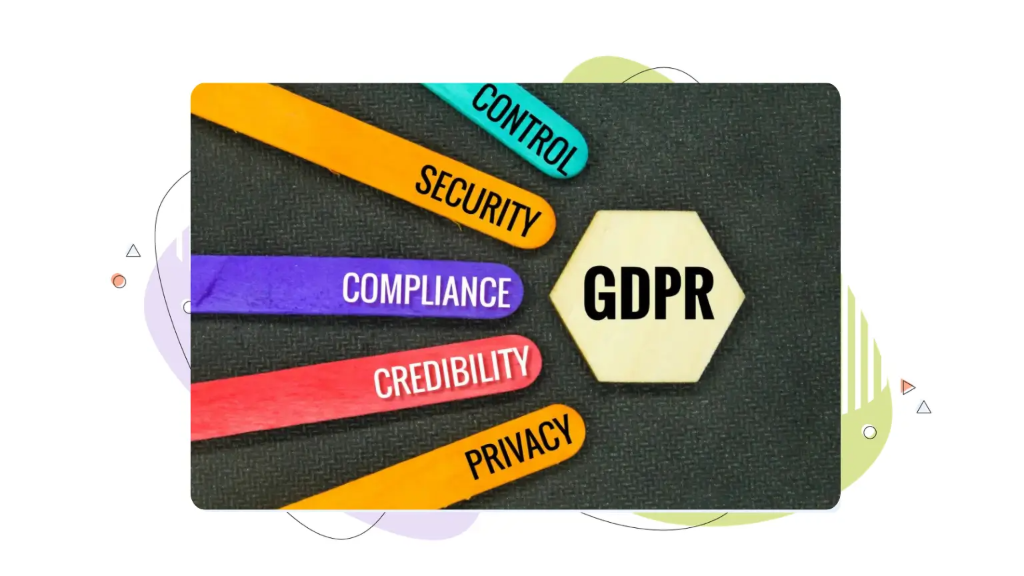
GDPR Domains vs. Domain Privacy: Do You Need Both?
If you’re dealing with EU customers, you may be wondering how GDPR domains and GDPR protection overlap with traditional privacy services. GDPR forces registrars and other parties to treat personal data carefully.
GDPR is regional and based on legal status. It’s designed around EU data subjects and processing activities, and interpretations can vary across registries and registrars.
Domain privacy, by contrast, operates as a technical and contractual layer that applies regardless of your citizenship or your visitors’ locations. Your visible contact information gets replaced by proxy or registrar details across the board.
Also, GDPR generally redacts or limits data exposure. But, automated bots and malicious actors don’t care about legal boundaries. They exploit whatever remains visible or misconfigured.
From a practical, risk‑management perspective, relying solely on GDPR may leave gaps. This is particularly true if you own multiple domains, work with international suppliers, or move between registrars over time.
Privacy services complement regulation by providing a consistent technical shield. They centralize exposure through the proxy, manage forwarding channels, and maintain a clean separation between your real details and public records. For international HostPapa customers and founders running remote teams, the emerging consensus is simple:
- GDPR plus domain privacy forms a stronger combination than either one alone.
Who Needs Domain Privacy Most? (Personas)
While almost any domain owner can benefit from domain privacy for business, some groups feel the impact more acutely. Thinking in personas helps you see where your own situation fits and why an abstract feature may be more important than it first appears.
Small Business Owners
If your company address is your living room, public WHOIS listings reveal your home address to anyone who cares to look. Small business domain privacy protects your personal space from uninvited visits or direct marketing mail.
Freelancers and Consultants
Designers, developers, and consultants often register domains under their own name while working from shared spaces or home offices. Domain privacy for freelancers should not be taken for granted.
Privacy keeps your direct phone and address out of automated lists and directory scrapes, while your portfolio and contact forms handle legitimate client outreach.
Content Creators and Bloggers
If you talk about sensitive topics or strong opinions, exposed WHOIS records add another channel for harassment and doxxing attempts. Privacy services shield your physical location and private inbox while you continue publishing under your brand name. This action guarantees that personal blog privacy is your given right.
eCommerce and SaaS Sites
Online stores and SaaS platforms already sit squarely in cybercriminals’ sights because they handle payment data and user accounts. Public WHOIS gives attackers extra context for phishing and social engineering. Attackers need details they can craft into convincing scams, details such as:
- Company names.
- Contact points.
- Infrastructure details.
Domain privacy reduces the external footprint attackers can exploit, while other security layers (SSL, firewalls, monitoring) handle transactional and application risks.
Privacy‑Conscious Individuals and Portfolio Owners
Some people prefer a smaller public footprint, especially when experimenting with:
- Side projects.
- Test sites.
- Multiple brand ideas.
If you manage dozens of domains, WHOIS privacy keeps your name from being a key that unlocks your entire portfolio to competitors, brokers, and data harvesters.
For HostPapa’s many small‑business customers, that portfolio‑level privacy becomes increasingly important over time. Our current small-business customers have come to understand that they can reclaim control over their personal data.
In each of these cases, domain privacy works alongside good hosting, SSL, and security habits. It’s not a replacement, but a quiet background layer that keeps your professional life visible while your personal details stay hidden.
Bibliography
- Gibson, W. 2003. Burning Chrome. Reprint. New York City: Harper Collins.
- Morgan, R.K. 2003. Altered Carbon. First edition. New York City: Del Rey.
- Healey, J. 2013. A Fierce Domain: Conflict in Cyberspace, 1986 to 2012. First edition. Vienna, Virginia: Cyber Conflict Studies Association.
- Stephenson, N. 2012. We Solve for X: Neal Stephenson on getting big stuff done. [Online]. [Accessed 9 February 2026]. Available from: https://youtu.be/TE0n_5qPmRM?si=Yf-lcrks5AVa3P5M
- Farnsworth, L.D. 2025. Minimum Viable Privacy Compliance: Step-by-Step Instructions for Small to Medium Businesses with a Global Reach. First edition. Amazon.com.